

📄
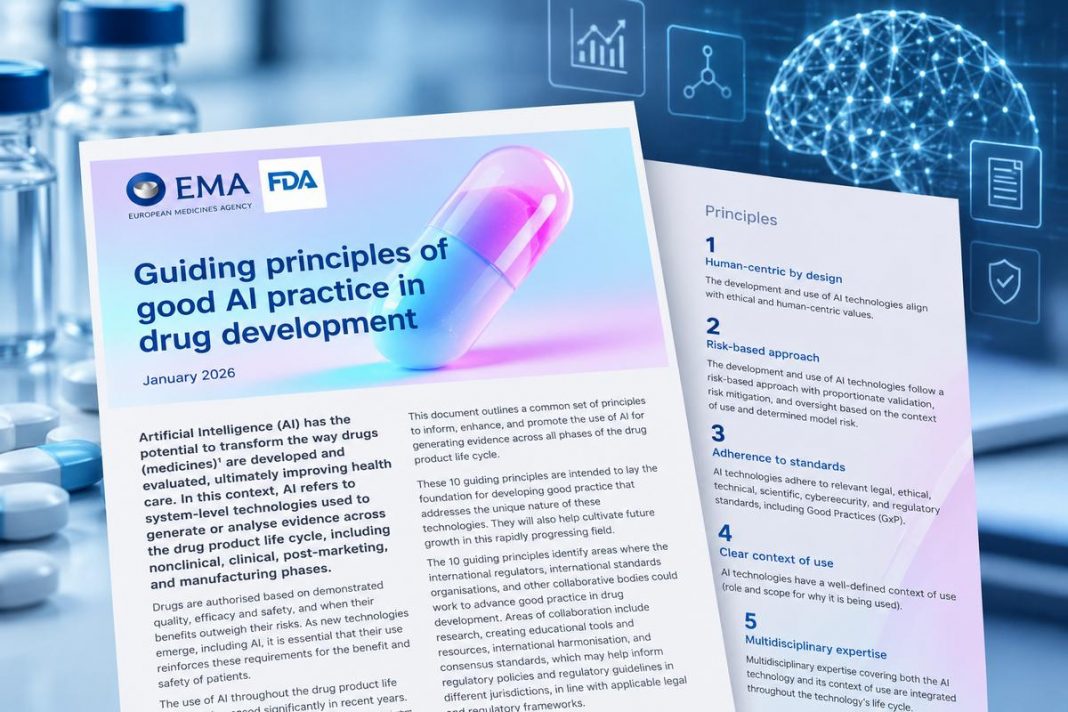
Guiding Principles of Good AI Practice in Drug Development
Publisher: EMA & FDA
Date: January 2026
Format: PDF Document
Date: January 2026
Format: PDF Document
Overview
Official joint document by the European Medicines Agency (EMA) and the US FDA (January 2026). This document outlines 10 guiding principles for the development and use of AI technologies across all phases of the drug product life cycle, including nonclinical, clinical, post-marketing, and manufacturing phases.
10 Guiding Principles of Good AI Practice
- Human-centric by design: The development and use of AI technologies align with ethical and human-centric values.
- Risk-based approach: Validation, risk mitigation, and oversight are proportionate to the context of use and determined model risk.
- Adherence to standards: Strict compliance with legal, ethical, technical, scientific, cybersecurity, and regulatory standards (including GxP).
- Clear context of use: The role and scope for why the AI is being used must be well-defined.
- Multidisciplinary expertise: Integration of experts covering both the AI technology and its specific context of use throughout the life cycle.
- Data governance and documentation: Traceable, verifiable data provenance and processing steps, maintaining strict privacy and GxP compliance.
- Model design and development practices: Promoting transparency, reliability, generalisability, and robustness through good software engineering.
- Risk-based performance assessment: Evaluating the complete system, including human-AI interactions, using fit-for-use metrics.
- Life cycle management: Implementing risk-based QMS for scheduled monitoring and periodic re-evaluation (e.g., to address data drift).
- Clear, essential information: Providing accessible, plain-language information to intended audiences regarding the AI’s performance, limitations, and interpretability.
