

📄
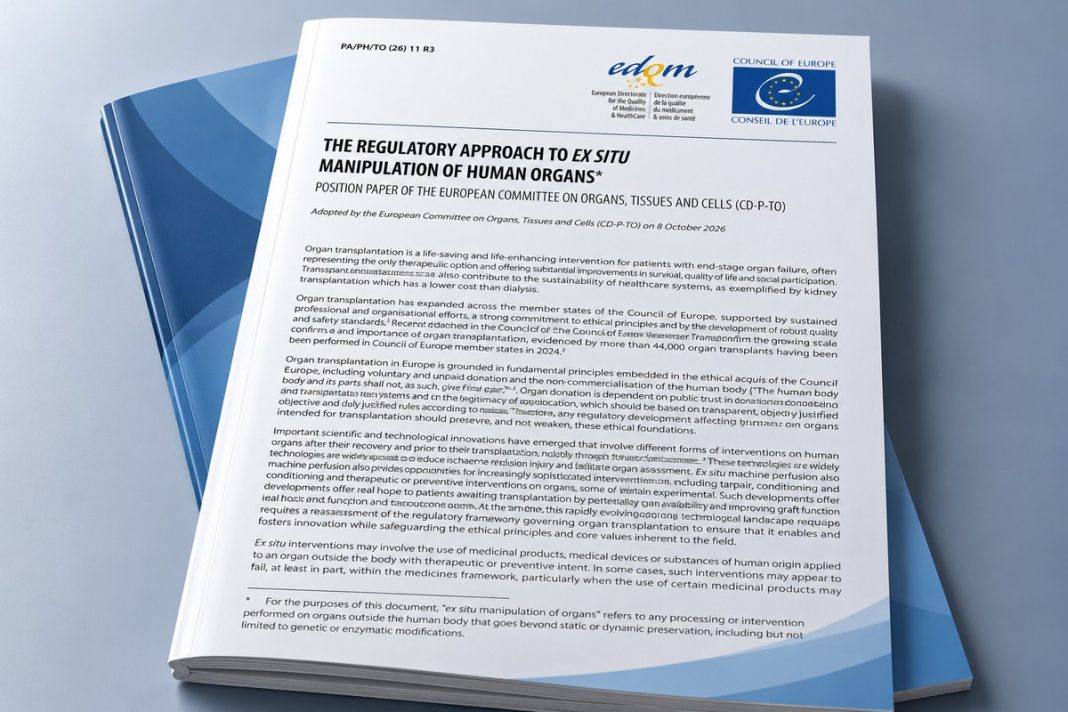
The Regulatory Approach to Ex Situ Manipulation of Human Organs
Publisher: Council of Europe (EDQM / CD-P-TO)
Date: 8 October 2026
Reference: PA/PH/TO (26) 11 R3
Date: 8 October 2026
Reference: PA/PH/TO (26) 11 R3
Overview
Official position paper by the Council of Europe’s European Committee on Organs, Tissues and Cells (CD-P-TO), adopted on 8 October 2026. This document outlines a regulatory approach for human organs that undergo ex situ manipulation, including genetic or enzymatic modifications, prior to transplantation.
Risks of Classifying Manipulated Organs as Medicinal Products
- Ethical conflicts: Regulating organs as medicinal products may blur the fundamental ethical distinction between a donated human organ and a commercial therapeutic product, potentially undermining public trust.
- Inequity in patient access: High development costs and premium pricing could result in access to transplantation being determined by financial resources rather than clinical need.
- Risks to healthcare sustainability: Additional costs from pharmaceutical manufacturing requirements, licensing, and market pricing could place severe financial pressure on public transplant programmes.
Six Recommendations for a European Regulatory Model
- Integration into regular donation programmes: Manipulated organs should be managed within official, publicly managed organ donation programmes based on scientific and ethical criteria.
- Distinction of ownership: Donated organs must remain non-commercial public resources, while intellectual property rights may only apply to the technologies (e.g., perfusion systems, medicinal products) used to manipulate them.
- Distinction between assessment and authorisation: Assessment of quality, safety, and efficacy may involve pharmaceutical standards, but the final authorisation for clinical use should remain under the purview of transplant authorities.
- Specific authorisation for organ processing: Medicinal products developed for and inextricably linked to organ processing should be subject to an authorisation for organ processing, rather than a standard marketing authorisation.
- Incorporation into existing allocation systems: Organ distribution must continue to be guided solely by clinical criteria and official waiting lists, with technology providers having no role in recipient selection.
- Safeguarding non-commercialisation: Regardless of any ex situ interventions, human organs must remain regulated under the transplantation framework and should not be treated as commercial products.
