

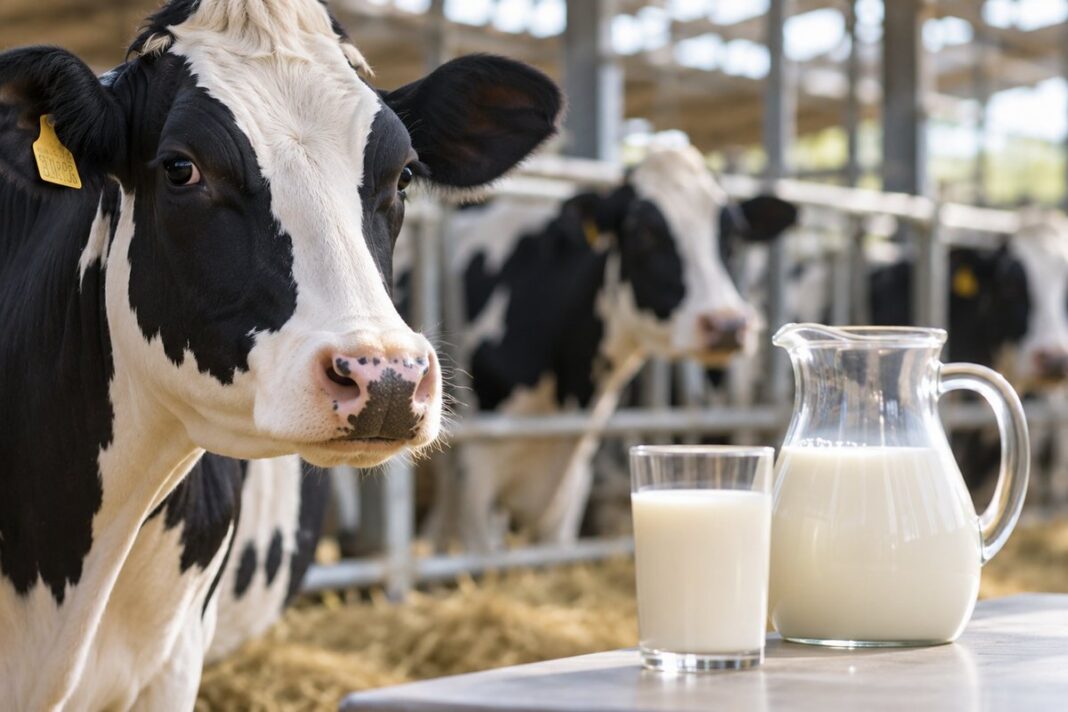
A nucleoside-modified mRNA vaccine developed by researchers from the University of Pennsylvania and the US Department of Agriculture (USDA) significantly reduced viral replication and disease severity in lactating dairy cows experimentally challenged with highly pathogenic avian influenza (HPAI) H5N1. The vaccine reduced peak viral RNA levels in milk by approximately 1,000-fold and limited mastitis and mammary tissue fibrosis, according to a study published in Nature Biotechnology.
The findings provide experimental evidence supporting the potential of mRNA–lipid nanoparticle (mRNA–LNP) technology as a vaccine platform for protecting dairy cattle against H5N1 infection.
H5N1 infection poses a challenge to the dairy industry
The emergence of HPAI clade 2.3.4.4b H5N1 in US dairy cattle in 2024 raised concerns about animal health, milk production and the potential for further viral adaptation in mammals.
Unlike typical influenza infections, H5N1 in lactating cattle primarily affects mammary gland tissue. The virus targets milk-producing epithelial cells, causing mastitis, reduced feed intake and substantial declines in milk production. Infected milk is also considered an important route of viral transmission between animals.
The development of effective vaccines could therefore help reduce disease severity, limit viral shedding and support the protection of dairy herds.
mRNA–LNP vaccine design and experimental study
The research team developed a nucleoside-modified mRNA vaccine encoding the hemagglutinin (HA) surface protein of A/dairy cattle/Texas/24-008749-002/2024, a virus representative of circulating bovine H5N1 strains.
The experimental study included eight lactating Holstein cows aged between two and eight years. Four animals received two intramuscular doses of the vaccine, each containing 500 μg of mRNA–LNP, administered three weeks apart. Four control animals received saline.
The cows were challenged with live H5N1 virus through intramammary inoculation 49 days after the initial vaccination. The researchers subsequently monitored clinical signs, viral RNA levels in milk and other biological samples, milk production, rumination and mammary tissue changes over a 14-day period.
Vaccine-induced immune responses and milk analysis
Vaccination induced HA-specific antibody responses in both serum and milk. Neutralizing antibodies were detected in the blood, with antibody levels increasing following the booster dose. The researchers did not assess the neutralising activity of milk antibodies because naturally occurring inhibitors in milk interfered with the assays.
The researchers also investigated whether vaccine-derived mRNA could be detected in milk following intramuscular administration.
Using a quantitative PCR assay with a detection limit of 65 copies per microlitre, they found no detectable vaccine-derived mRNA in milk samples collected during the eight days following either the initial or booster vaccination.
No apparent adverse effects associated with vaccination were observed.
Reduced viral replication and protection against mastitis
Following experimental H5N1 challenge, vaccinated cows demonstrated substantially lower viral RNA levels in milk from inoculated mammary quarters.
Peak viral RNA levels were approximately 1,000-fold lower than those measured in unvaccinated control animals. The difference was also statistically significant at several additional time points during the observation period.
Vaccinated animals experienced less disruption to milk production and rumination. In contrast, unvaccinated cows showed substantial reductions in milk yield, accompanied by clinical signs consistent with severe mastitis.
Milk from unvaccinated animals exhibited pronounced changes in colour and consistency. California Mastitis Test (CMT) scores in inoculated mammary quarters consistently exceeded 2 on a scale of 0–3, indicating moderate to severe inflammation and leukocyte infiltration.
By comparison, vaccinated cows generally recorded CMT scores below 1, indicating substantially less mammary inflammation.
The researchers also identified differences in viral distribution. In unvaccinated animals, evidence of infection was found in uninoculated mammary quarters, suggesting that the virus had spread within the mammary gland. Viral RNA was also detected in several other sample types, including nasal and ocular swabs, urine, saliva and blood.
In vaccinated animals, viral RNA was detected in substantially fewer samples, and no viral RNA was detected in milk from uninoculated mammary quarters. Nevertheless, viral antigen was detected in mammary tissue from an uninoculated quarter of one vaccinated animal, indicating that vaccination did not completely prevent viral spread within the mammary gland.
Reduced mammary tissue damage and fibrosis
The study also evaluated structural damage to mammary tissue following infection.
Macroscopic examination revealed substantially more extensive lesions in inoculated mammary quarters of unvaccinated cows. The average lesion score was 95.4, compared with 8.1 in vaccinated animals.
Microscopic examination using Picrosirius red collagen staining further demonstrated significantly less mammary fibrosis in vaccinated cows.
These findings indicate that vaccination not only reduced clinical disease and viral replication but also limited structural damage to the mammary gland.
Implications for veterinary vaccine development
The study provides experimental evidence that an mRNA–LNP vaccine can induce immune responses and reduce the severity of H5N1 infection in lactating dairy cattle.
The results are particularly relevant to veterinary vaccine development because they demonstrate protection against H5N1-associated disease affecting the mammary gland, an important target tissue in bovine H5N1 disease.
The authors emphasise that further research is needed to evaluate vaccine performance under field conditions, determine the durability of immune responses and establish whether vaccination can reduce transmission between animals. The study involved only eight animals and used an experimental intramammary challenge model, so the results cannot yet establish vaccine effectiveness under natural field conditions.
Larger studies will also be needed to assess the effects of different vaccination schedules and doses.
The findings add to the growing body of evidence supporting the application of mRNA vaccine platforms beyond human medicine and highlight their potential role in addressing emerging infectious diseases in livestock.
