

Introduction
In this combined interview, Russian pharmaceutical and GMP interpreter Alexander Podarewski discusses the transition to remote GMP inspections during the COVID-19 pandemic, the practical challenges of interpreting, document provision, preparation and communication between inspectors and pharmaceutical manufacturers.
The interviews were originally published by Pharmprom.ru in January, February and March 2021. The questions and substantive answers are retained in their original wording; standalone advertising inserts have been removed.
The experiences described in this interview relate primarily to the exceptional circumstances of 2020 and early 2021. The regulatory framework has since evolved. Under the Eurasian Economic Union (EAEU) Pharmaceutical Inspection Rules, remote inspections are now expressly addressed as a procedure that may be used in specified exceptional circumstances. They are not established as a general substitute for on-site inspections. The regulatory context and relevant distinctions are explained in the editorial note below.
GMP interpreters report on remote inspections
You were the first interpreter to accompany a Russian GMP remote inspection in Germany by the Russian regulatory authority GILS i NP. How would you describe the new format?
Our company specialises in interpreting at GMP inspections in Europe as well as written German, English and Russian translations of pharmaceutical documentation. A number of companies supplying various pharmaceuticals to the Russian and EAEU markets were subject to numerous official GMP inspections prior to the outbreak of the Covid-19 pandemic, most of which involved the use of interpreters. However, most GMP inspections were cancelled or postponed from the end of March 2020, not only in Germany but also worldwide.
Nevertheless, thanks to the development of an alternative approach, many temporarily cancelled GMP inspections could be carried out online or remotely. The first GMP remote inspection for compliance with Good Manufacturing Practice (GMP) requirements was carried out under COVID-19 conditions by the Russian inspectorate in Basel, Switzerland. Roche was the company inspected. In Germany, the site of Madaus, a subsidiary of Mylan, was the first to be inspected in the same week of May 2020. I was invited as a Russian interpreter for this GMP inspection.
Since then, many more GMP inspections of pharmaceutical manufacturers in German-speaking countries have been carried out with the support of our interpreters.
A remote GMP inspection requires a detailed review of documents, videos and other information (on various data carriers) relating to the site to be inspected, as well as a thorough assessment of all possible risks. In the past, inspectors, accompanied by interpreters, visited the incoming goods area, storage rooms for active ingredients, other components and finished products, weighing areas, production areas, laboratories for in-process control and microbiological purity control, building technology and ancillary areas, including water and air treatment facilities.
The restrictions on international travel, social-distancing measures and other measures introduced during the pandemic severely affected pharmaceutical manufacturers’ ability to accommodate inspectors. For an audit to be successful, however, it is crucial to demonstrate all the relevant areas and steps in the production processes so that GMP inspectors can properly verify that everything at the site is in order or make appropriate observations.
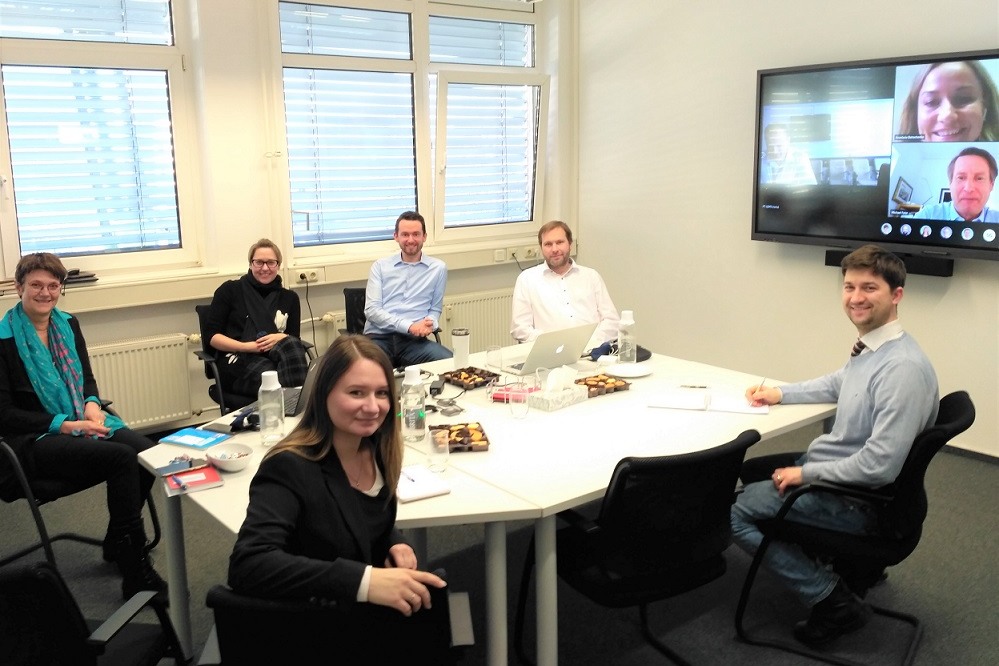
A GMP remote inspection, like an on-site inspection, is conducted by two inspectors. The inspectors communicate with the site to be inspected via video conference. What participants previously experienced in person is recreated through video recordings and pictures of the company premises and production processes. Otherwise, to put it very briefly, the process boils down to examining documents relating to the structure of the processes within the pharmaceutical company being inspected.
However, the inspectors emphasise that the remote or document inspection will not completely replace the usual on-site inspection. Therefore, once travel restrictions are lifted, GMP inspectors will return to the standard inspection process.
Mr Podarewski, to what extent has the work of an GMP interpreter changed in light of the pandemic and online audits?
The shift to GMP remote inspections has significantly changed the manner of communication, particularly how the interpreter interacts with the conversation partner for whom they are interpreting Until then, the interpreter had always worked in person, meaning that participants were physically present and communicated in different languages.
For most of us, the use of modern communication tools is neither new nor particularly challenging. Nevertheless, informal discourse, such as conversations about the weather or other trivial topics, is fundamentally different from conveying information on which not only the fate of a global pharmaceutical company but also the drug supply for an entire nation may depend.
Interpreting, in general, is one of the most demanding intellectual activities, and pharmaceutical interpreting ranks among the most complex fields of interpreting. It requires not only specialised training and impeccable linguistic skills, but also the ability to understand the source information quickly and convey it accurately in another language.
Furthermore, interpreters do not simply communicate information; they also operate on a non-verbal level by transmitting human emotions. This includes facial expressions, gestures and the intonation of what is said. This, in turn, requires participants to be able to see and hear one another without disturbance.
How is this achieved technically?
It is not only the quality of the telecommunications connection that plays a crucial role. Other important factors include a high-quality microphone, loudspeaker, noise-cancelling headphones, microphone shock mount, broadband internet, a stable connection or reliable Wi-Fi, optimal soundproofing of the room while maintaining an appropriate operating volume, and the availability of screen sharing and rapid technical support in the event of disruptions.
A range of additional features is also important. While numerous programmes are designed solely for communication between multiple participants, the ability to exchange files, upload documents quickly and store them securely is particularly important. After all, this involves confidential pharmaceutical information.
At the time of the interviews, communication tools such as Slack, Cisco Webex Meetings and Microsoft Teams were commonly used for online collaboration. The choice of platform should, however, be based on the specific security, confidentiality, access-control and technical requirements of the inspection. Features and service arrangements have changed since 2021, so the software comparisons in the original interview should be understood as a snapshot of the tools available at that time.
For pharmaceutical companies and regulatory authorities, one of the most critical aspects is the security of these systems. For me, as a language mediator, clear voice transmission without audio or video interference is equally important. Zoom adds another option for particularly demanding projects: separate interpreter channels for simultaneous interpreting.
Are the GMP interpreters present during the entire remote inspection?
It’s important to note upfront that a GMP remote inspection involves two main steps: the self-review of the requested facility documents by the GMP inspectors, and the subsequent discussion of any questions that arise during the documentation review. The latter takes place during the document inspection.
During the GMP document inspection, the parties arrange teleconferences where relevant employees of the pharmaceutical company address the inspectors’ questions. The interpreter can either be physically present at the site or join these teleconferences virtually.
For the vast majority of GMP inspections to verify compliance with Good Manufacturing Practice, freelance interpreters are hired. These are typically independent professionals with no affiliation to the pharmaceutical company being inspected.
The teleconferences scheduled as part of the GMP inspection plan sometimes take place only once or twice during the entire inspection, while in other cases they may occur multiple times a day and quite spontaneously. However, since freelancers typically provide translation services to a large number of clients and often have a full schedule, participating via an online connection for planned hourly assignments can lead to significant availability issues if the inspection schedule changes.
Therefore, most pharmaceutical companies prefer to have an interpreter on site, allowing communication to take place at any unforeseen moment. In addition, between the online meetings with GMP inspectors, it is often necessary to translate certain documents and address the inspectors’ questions via email in preparation for upcoming meetings. As a result, we interpreters always have plenty to do.
A New Information Provision Format for GMP Inspections
Mr Podarewski, how did you interpret during the conference calls between the pharmaceutical companies and the Russian regulatory authorities – by joining virtually or in person?
It all began with virtual presence during the remote inspection of the company Madaus in Troisdorf because in May 2020 the world was still in a certain state of shock due to the COVID-19 pandemic. For this reason, the number of employees and individuals involved at the production sites was restricted as far as possible. Of course, this also included interpreters, although no foreign audit can be conducted without them.
In the following months, pharmaceutical companies, particularly in Germany and Switzerland, increasingly began to use interpreters on site. Of course, there was strict access control at factory entrances, and minimum-distance and hygiene rules were observed during work.
The challenge with remote work is that nobody can predict exactly when the interpreter will be needed. While inspectors do their best to adhere strictly to the schedule of online meetings with the companies being inspected, unforeseen circumstances may arise that require a change of plan. This includes, above all, questions that arise during the review of company documents. In addition, various changes on the part of the pharmaceutical manufacturer are possible.
As a result, booking an interpreter only for certain hours severely restricts the flexibility of both parties during a GMP inspection.
Can you tell us how much the GMP inspection procedure has changed?
The Russian regulatory authority provided the inspected company with a plan containing a list of the documents to be inspected 10 days before the GMP inspection. The foreign pharmaceutical manufacturer then submitted the requested documents via its official representative or uploaded them directly to the cloud before the inspection began. If paper copies of the documents could be provided under the prevailing conditions, they were delivered to the authorities by the company’s Russian representative.
It is worth noting that the documentation of Swiss companies was often prepared only in English. In Germany and Austria, documents were often bilingual, i.e. German-English, which would generally be sufficient for the inspectors. However, there were numerous companies, including some large pharmaceutical corporations, whose documentation was predominantly in German. This often concerned documents relating to qualification and validation.
A considerable number of documents are reviewed during each audit. Translating them all in full within only 10 working days before the GMP inspection is nearly impossible, as some dossiers can contain hundreds or even thousands of pages. In addition, inspectors are not physically able to review such extensive documentation thoroughly within a short inspection period.
For this reason, the inspectors reviewed documents mainly on a random-sampling or excerpt basis, which somewhat called into question the necessity of translating all documents in full. An additional challenge was that inspectors had to be able to access all parts of a document relating to the quality of the products submitted for a foreign GMP inspection.
If the interpreter is present on site throughout the GMP inspection, interpreting is possible at any time. Although inspectors and inspected companies require much more time for online audits than for on-site inspections, many aspects remain unchanged.
The task of each GMP inspector is to verify compliance with the applicable GMP guidelines by inspecting the production of the respective company, whose products may also be imported into the inspector’s home country. The Good Manufacturing Practice (GMP) guidelines, in turn, represent a system of requirements for production organisation and quality control in the manufacture of pharmaceuticals.
In this regard, the COVID-19 pandemic, social-distancing measures and worldwide travel restrictions changed nothing at all. Only the format for presenting information about the site and numerous production specifics, as well as the format for receiving and analysing this information, changed. In the past, inspectors, accompanied by interpreters, had personal access to all company premises and were able to communicate directly with each employee and discuss issues relating to their area of responsibility. During remote inspections, this was no longer possible.
Does this mean that all companies that were due for an on-site GMP inspection must undergo a remote inspection?
As far as I know, only pharmaceutical manufacturers undergoing inspection for at least the second time had a remote or virtual GMP inspection, and this was intended as an emergency measure. On-site audits would resume only after the COVID-19 pandemic.
I would like to add here that the inspectors bear an enormous responsibility for putting a pharmaceutical company through its paces. Remote document review increases the time required to conduct a GMP inspection by two to three times and comes with a number of other technical limitations. This puts pharmaceutical companies and their Russian representatives, regulatory authorities and interpreters in a difficult position, to which they must first adapt so that companies can continue to supply foreign markets with safe products.
How would you assess the role of the representative of the inspected foreign company from an interpreter’s perspective?
The Russian or EAEU representatives of the inspected companies are in direct contact with the inspectors even before the GMP inspection and play an important role in every GMP inspection. They have many years of experience working with the relevant regulatory authorities.
However, during my professional experience in this field, it happened several times that the representative provided no support after the start of the inspection other than forwarding the original emails from Russian inspectors to the German company – sometimes there was not even an attempt to translate the emails into English.
In most cases, the representatives are quite proficient in English. In such situations, when I was either still on site until the end of the working day or already at the hotel, I often had to translate the inspectors’ observations and requests for explanations or additional documents urgently. This enabled the quality assurance manager, who in most cases is also the inspection coordinator at the inspected site, to organise the provision of any additional information requested before my arrival at the facility and until the next inspection day.
During one GMP inspection, the Russian representative promised to take care of the translation of the necessary documentation in Russia, as I was already occupied as an interpreter during the audit and had no time for translation. The required translations concerned the annual Product Quality Reviews (PQRs) for several products, including the PQR for a finished product, the overview of complaints, changes and OOX results.
Obviously, the Russian representative forgot in the heat of the moment. We had to help ourselves out of a difficult situation, so I spontaneously interpreted the excerpts from these documents after the inspectors had selected them during the video transmission.
Work in the pharmaceutical field is very responsible and extremely demanding for all participants. And we interpreters help as much as we can.
Remote Russian GMP inspections: preparation and active phase
Mr Podarewski, what happens immediately before the start of a remote GMP inspection?
A representative of the foreign site to be inspected is usually very actively involved in initiating a remote GMP inspection, but less so in the active phase. There is also a very close relationship between the site, the interpreters and the GMP inspectors.
The provision of documents rests on the shoulders of the manufacturer, while urgent specialised translation of the documents into Russian or English is the responsibility of specialist translators. Sometimes Russian or Belarusian GMP inspectors have quite a good command of English. However, this is not always the case. Nor is the documentation from European pharmaceutical manufacturers always bilingual or available in English.
When online or remote GMP inspections were first introduced, pharmaceutical interpreters were initially invited to participate virtually by joining discussions via the internet from their homes or workplaces. However, this proved unfavourable for many reasons, as I explained in detail in the first article of this series.
It is easiest and most practical if German-Russian interpreters are personally present on site and can support communication at any time. It is, of course, important not only to show the document but also to explain to the GMP inspector the purpose for which it was created, the role it plays in the pharmaceutical quality system and how it is implemented in practice.
As a rule, the necessary documents created in a foreign language as part of a virtual audit must be professionally translated in advance, usually into Russian. Naturally, the site is prepared for this process. However, during the document review, GMP inspectors may need to inspect related documents as well. It may therefore be necessary to interpret certain passages of a document professionally. When planning, it should be borne in mind that this essential part of the remote GMP inspection can slow down the entire inspection process.
I would like to point out that many representatives of the foreign pharmaceutical companies or laboratories to be inspected are often already in possession of specialised translations of their documents into Russian or English. Manufacturers may not even be aware that such specialised translations exist.
In the past, the representative could translate the relevant documents themselves or commission a pharmaceutical translation agency. Since one of the decisive criteria in a GMP inspection is the rapid submission of documents, a proactive representative can be an extremely useful asset during an audit. Incidentally, this applies to both formats of inspections: on-site GMP inspections and remote inspections.
As a specialised interpreter, what advice could you give pharmaceutical companies on how to prepare for a remote GMP inspection?
If the foreign company to be inspected is not represented by a pharmaceutical registration, certification and authorisation consultancy service, but by a department of the pharmaceutical company itself in the country of the regulatory authority, such a representative will know, based on years of experience in the company, which documents the GMP inspectors are likely to check in addition to the Site Master File and the important documents listed in the inspection plan.
It is recommended to upload these documents to a server in advance, as Belarusian or Russian GMP inspectors usually start checking the documents before the first official day of the inspection. In our experience, many pharmaceutical companies start uploading documents to the cloud two to three weeks before a remote GMP inspection, or immediately after its confirmation, and give the Russian inspectors access rights shortly after receiving the inspection plan.
In my view, previous GMP inspections by the regulatory authorities of the country concerned, regulatory authorities of other countries and customer audits of the pharmaceutical site are highly underestimated.
Firstly, legislation in pharmaceuticals and GMP does not change as much as the trends that inspectors pay attention to. It is therefore very important to look at the protocols and results of previous years’ GMP inspections and check where various inspectors have focussed their attention.
Secondly, it is worth checking which issues the GMP inspectors have paid little attention to, but where new problems or weak points may have arisen in the company. This means being prepared for surprises if such details are checked after all.
Thirdly, it must be confirmed whether all deficiencies from previous GMP inspections have been rectified and all comments from GMP inspectors have been taken into account.
How do the parties communicate immediately after the start of the remote GMP inspection? Are there any differences to the usual on-site inspection?
It is customary to start the GMP inspection with the introduction of the parties, including their positions, education and professional experience, the formulation of the inspection objectives by the GMP inspectors and an introductory presentation of the pharmaceutical company to be inspected.
An on-site inspection usually involves a tour that begins with the receipt of materials, goods, products or packaging materials at the company (or samples or test specimens for the laboratory) and continues along the flow of goods.
For remote GMP inspections, it is practical if the pharmaceutical manufacturer to be inspected shows a pre-recorded video of the flow of goods from the meeting room. This has several advantages: The video can be filmed under suitable conditions, without a hectic pace and, for example, in the evening so as not to disturb other employees of the pharmaceutical company at work.
It is important to create such a video with appropriate quality and resolution. When the video is reviewed and paused, the image should remain in focus, giving GMP inspectors the opportunity to write down room and equipment numbers and pay attention to important details such as labels indicating the appropriate qualification status and identification tags on products.
If this is not possible due to insufficient video resolution, filming a replacement video at the company can take a great deal of time. This often happens at the most inopportune moment, when no additional time is available.
After viewing and discussing the introductory presentation and video recordings, the parties gradually move on to discussing the documents and information specified in the GMP inspection plan.
In your experience as a pharmaceutical interpreter, what else is important?
It should not be forgotten that documents uploaded to the server should remain available for the period of time that the GMP inspectors allow for the preparation of an inspection report (30 calendar days).
While inspected pharmaceutical companies were already quite concerned about the confidential data contained in controlled copies issued before the coronavirus pandemic, these concerns increased significantly with remote GMP inspections. After all, the companies provide their “holy of holies”, namely the documentation of all necessary processes and working steps.
Some companies expressed their concerns with the following words: “In terms of documentation, we laid ourselves completely bare in front of the Russian GMP inspectors”.
However, in order to certify compliance with Good Manufacturing Practice, GMP inspectors must ensure that all manufacturing processes and quality control are organised in such a way that only safe medicinal products can enter the country of the inspectors.
To this end, the Russian GMP inspectors sign a written assurance of confidentiality with regard to all verbal and written information received and also give this assurance verbally during the online or remote GMP inspection.
An atmosphere of openness is very important, not only on the part of the pharmaceutical company being inspected but also on the part of the GMP inspectors.
In the past, it was customary to inform the company about the observations made by the inspectors and their classification, but later the classification of observations was no longer publicised.
No matter how wonderful and experienced the English or Russian specialist translator or pharmaceutical interpreter is, part of what is said is always lost when interpreting. That is in the nature of the expression of human thoughts. In fact, no one can express exactly what they mean, but only approximately. And when something is communicated in another language, even pharmaceutical specialists may find that interpreters do not know the company as well as its own employees.
It is also not uncommon for GMP inspectors to have different interpretations of the same phenomenon due to their experience and training. No matter how experienced they are, they might not immediately understand some of the technological features of the pharmaceutical company under review.
This is why feedback and detailed clarifications are very important, especially during GMP inspections. It is the open communication that makes it possible to avoid possible misinterpretations and misunderstandings when the GMP inspectors report their observations and the deficiencies found. It gives employees of the company being audited the opportunity to ensure that they have actually been heard.
Last but not least, it is important to engage interpreters who are experienced in accompanying GMP inspections and who are familiar with highly specialised pharmaceutical terminology.
We are proud to have a large number of extremely satisfied customers who have successfully passed GMP inspections, supported by our specialisation in pharmaceuticals and many years of experience in the field of Good Manufacturing Practice. We have therefore placed several letters of recommendation on our website so that clients can form an independent opinion about the standard of our work and read what pharmaceutical companies emphasise in their recommendations: Letters of recommendation and what is particularly important to them in such complex assignments.
The task of pharmaceutical interpreters is not only to translate highly complex information into a foreign language. Among other things, they also assume the role of mediators on a non-verbal level and convey human emotions.
We are therefore particularly pleased to receive such high praise for our work as: “We are surprised at how fluent the communication is with your interpretation!” This was said by Mr Björn Kümer, Managing Director of the A&M Stabtest site (specialising in pharmaceutical analysis of small molecules) in Mainz, during the first GMP remote inspection in Germany by the Belarusian inspectorate, which took place from 8 to 11 February 2021.
Editorial note: the current regulatory framework for remote GMP inspections
The experiences described in this interview should be read in their original historical context. The EAEU has since established a formal procedure for pharmaceutical inspections using remote interaction.
The relevant framework is set out in the EAEU Pharmaceutical Inspection Rules, approved by Decision No. 83 of the EEC Council of 3 November 2016 and subsequently amended, including by Decision No. 74 of 4 July 2023. Under the amended rules, remote inspections may be conducted in specified exceptional circumstances. These include certain public-health emergencies, such as an outbreak of a disease posing a danger to others, and force majeure circumstances or other events beyond the parties’ control that pose a threat to the life and health of inspection personnel. The decision to use remote interaction is made by the pharmaceutical inspectorate.
The rules also require the manufacturer to confirm the geolocation data of the production site before a remote inspection begins. The procedure includes document review, remote interviews and communication with the inspected company, as well as the submission and assessment of inspection findings. A remote inspection therefore remains a formal regulatory inspection procedure, not simply an informal document review or a video conference.
Importantly, the EAEU rules provide for an on-site follow-up inspection after the restrictions that justified remote inspection have been removed, subject to the conditions set out in the rules. For sites inspected for the first time, a subsequent on-site inspection is required where one or more critical non-compliances or more than five major non-compliances have been identified.
The current framework also specifies that the inspection programme must be sent to the inspected entity at least 10 business days before the inspection starts. This should be distinguished from the 10-day document-submission timeline described in the interview, which reflects the interviewee’s experience of the Russian inspection process at the time. The applicable requirements and timelines should always be confirmed against the current rules and the instructions issued for the individual inspection.
The practical recommendations in this interview remain relevant: manufacturers should prepare documentation in advance, review previous inspection findings, ensure that technical arrangements are reliable, maintain appropriate controls over confidential information and make qualified interpreters available throughout the inspection process where necessary. However, the exact inspection format, document requirements and schedule depend on the applicable regulatory procedure and the circumstances of the individual case.
